








Bitcoin (BTC) traded sideways on Monday after a turbulent week that saw a broad downturn across the crypto market.
Notably, over the past seven days, the world’s largest cryptocurrency has declined almost 6% amid widespread selling across major digital assets, reflecting cautious sentiment across the crypto sector as traders react to weakness in both equities and digital assets.
Meanwhile, according to popular analyst Mike McGlone, senior commodity strategist at Bloomberg Intelligence, collapsing crypto prices may be an early signal of a deeper economic slowdown. In a recent post on X, McGlone suggested that what some analysts may describe as a “healthy correction” could instead mark the beginning of a broader unwinding of risk assets.
The analyst pointed to extreme valuations in U.S. equities, noting that the stock market’s capitalization relative to GDP has reached levels not seen in nearly a century. At the same time, he highlighted unusually low volatility in major equity indices, including the S&P 500, which he views as a potential precursor to a spike in volatility. According to McGlone, the long-running “buy the dip” mentality that dominated markets since the 2008 financial crisis may be losing its effectiveness as liquidity conditions tighten and speculative bubbles deflate.
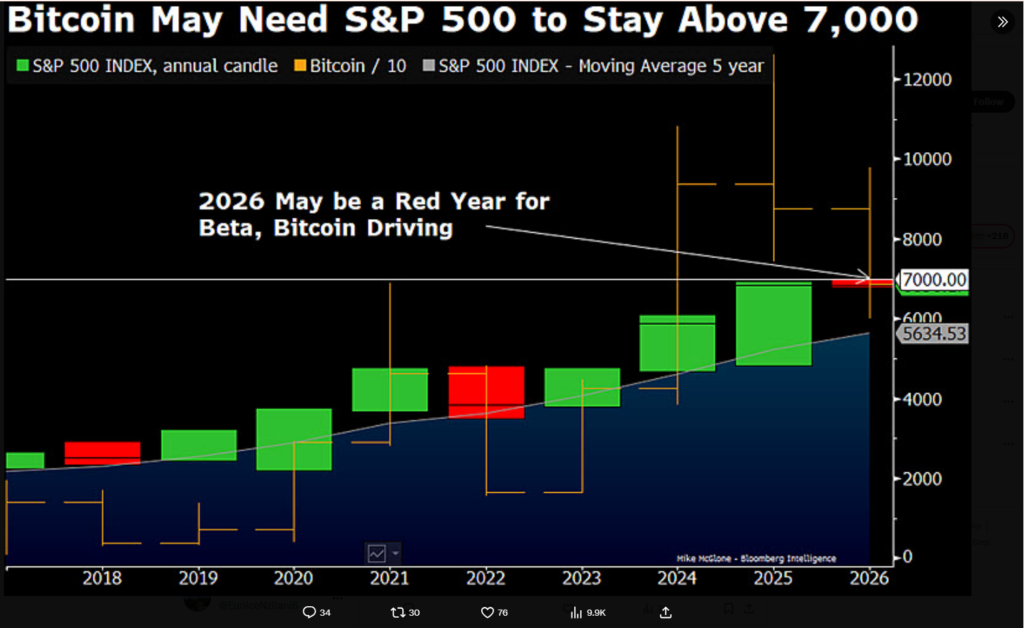
Within that framework, Bitcoin’s fate may be tightly linked to the broader stock market. McGlone argued that because Bitcoin behaves like a high-beta risk asset, it would struggle to remain elevated if equities enter a sustained downturn. He outlined a scenario in which a reversion in major stock indices could pull Bitcoin significantly lower, forming part of his base case that the cryptocurrency could ultimately retreat toward the $10,000 level if a U.S. recession coincides with a stock market peak.
 


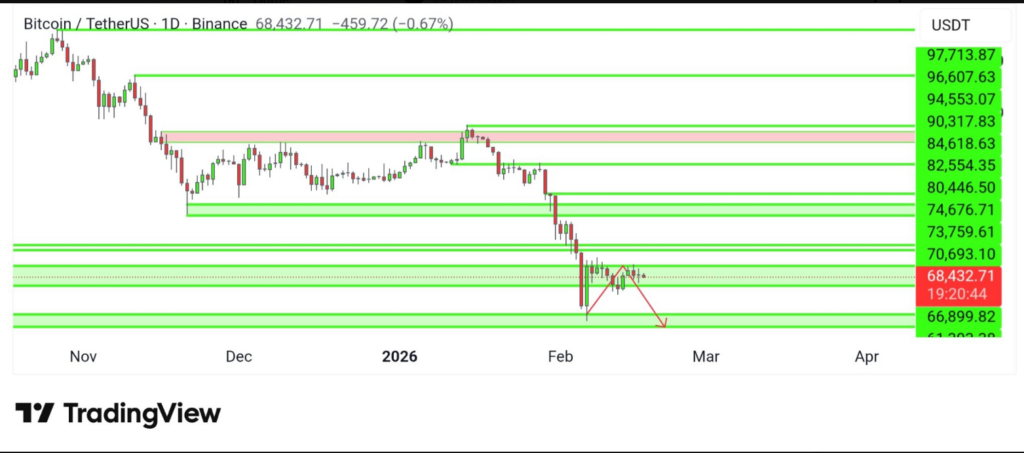
 Additionally, analyst Crypto Candy noted that Bitcoin recently faced rejection near the $71,000 region and has since extended its pullback. According to his analysis, continued downside momentum could push prices toward $61,000 or lower in the coming days if resistance levels hold. The short-term bias remains negative unless Bitcoin can reclaim and sustain levels above $71,000.
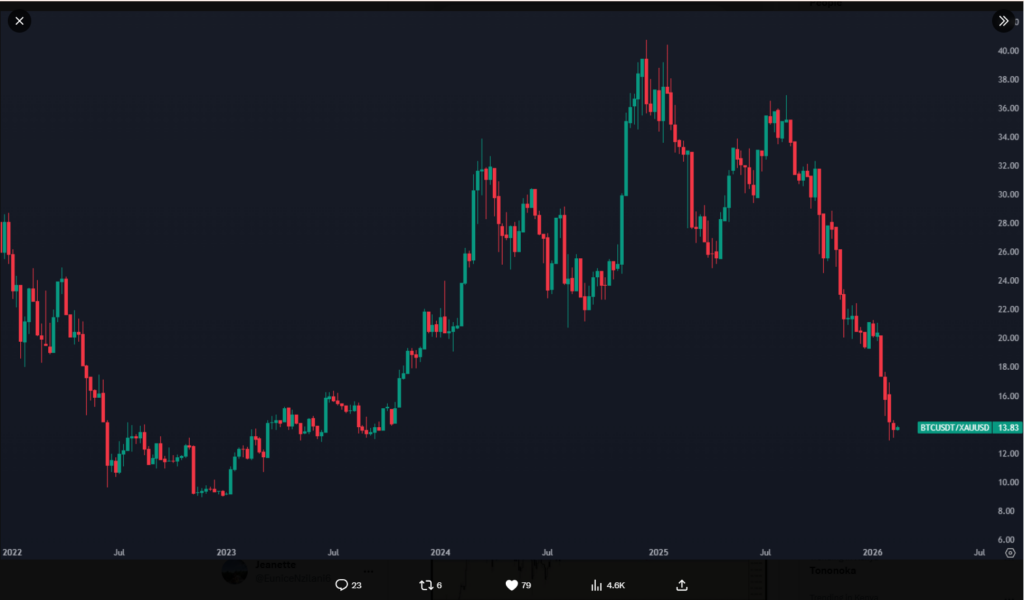
Furthermore, according to analyst Satoshi Stacker, the Bitcoin-to-gold ratio has returned to levels last seen in 2023, reviving the long-running debate over whether investors should favor digital assets or traditional safe havens during periods of economic uncertainty. Gold’s recent strength has added to the narrative that some capital may be rotating toward defensive assets as recession fears simmer.
Moreover, analyst K A L E O characterized the current environment as one of the best long-term buying opportunities since early 2020. From this viewpoint, waiting for a deeper correction risks missing a broader structural uptrend that supporters believe remains intact.
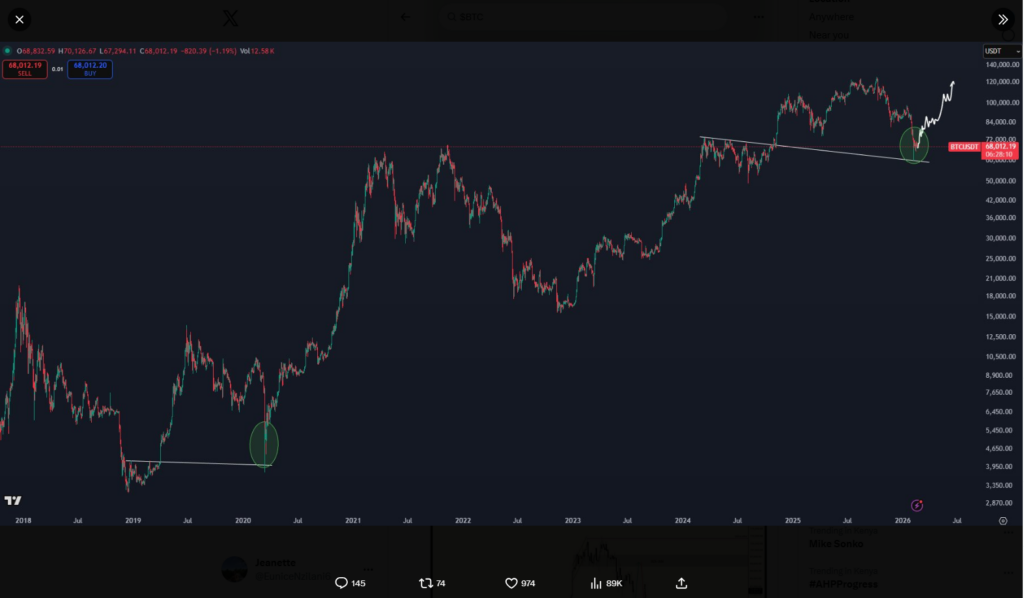
The divergence in outlook underscores a market caught between macroeconomic anxiety and enduring optimism about Bitcoin’s long-term trajectory. With recession risks increasingly discussed on Wall Street and volatility creeping back into global markets, Bitcoin’s next major move may depend less on crypto-specific catalysts and more on the direction of the U.S. economy.
At press time, BTC was trading at $63,134, reflecting a 4.07% decline in the past 24 hours.