






Bitcoin (BTC) traded mostly sideways on Friday amid high market liquidity.
Notably, over the past week, the world’s largest cryptocurrency experienced a decline of around 2%, reflecting steady but unrelenting selling pressure across key digital assets rather than broader trends.
Meanwhile, analyst Ali Martinez reported that more than 10,000 BTC, valued at approximately $760 million, were deposited on exchanges over the past week.
Historically, such inflows have been closely monitored because they often indicate potential selling intentions or increased trading activity from major holders. Additionally, exchange inflows like these often prompt traders to be cautious in the short term due to their potential to increase volatility.
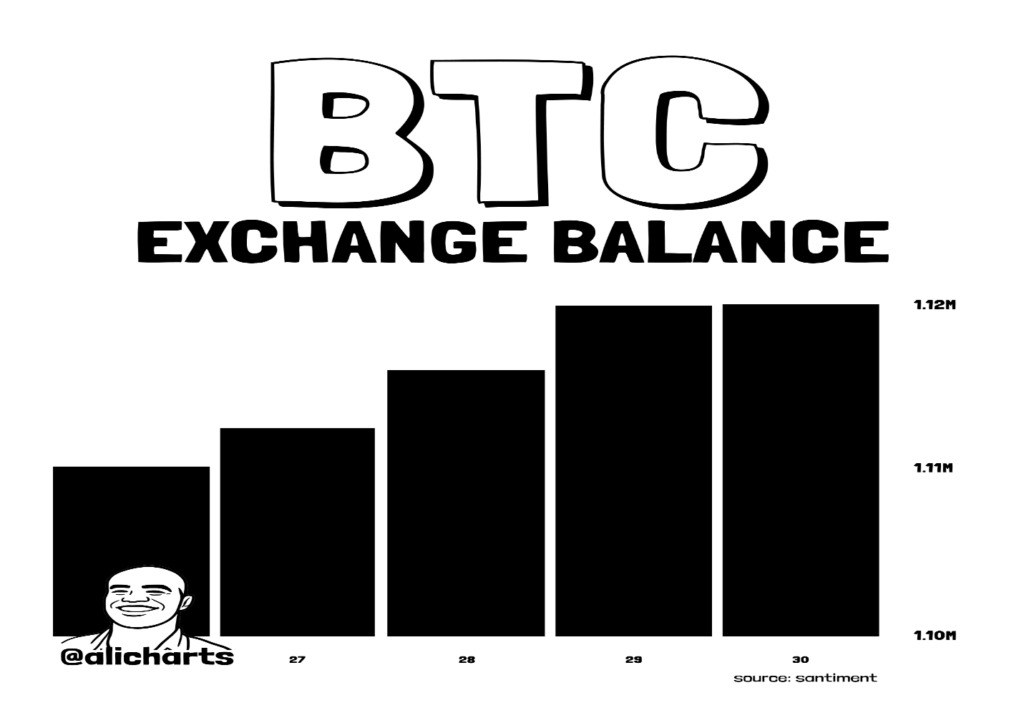
However, they do not always translate into immediate sell-offs, as coins transferred to exchanges may also be repositioned for derivative trading, hedging strategies, or internal custody reassignment.
 


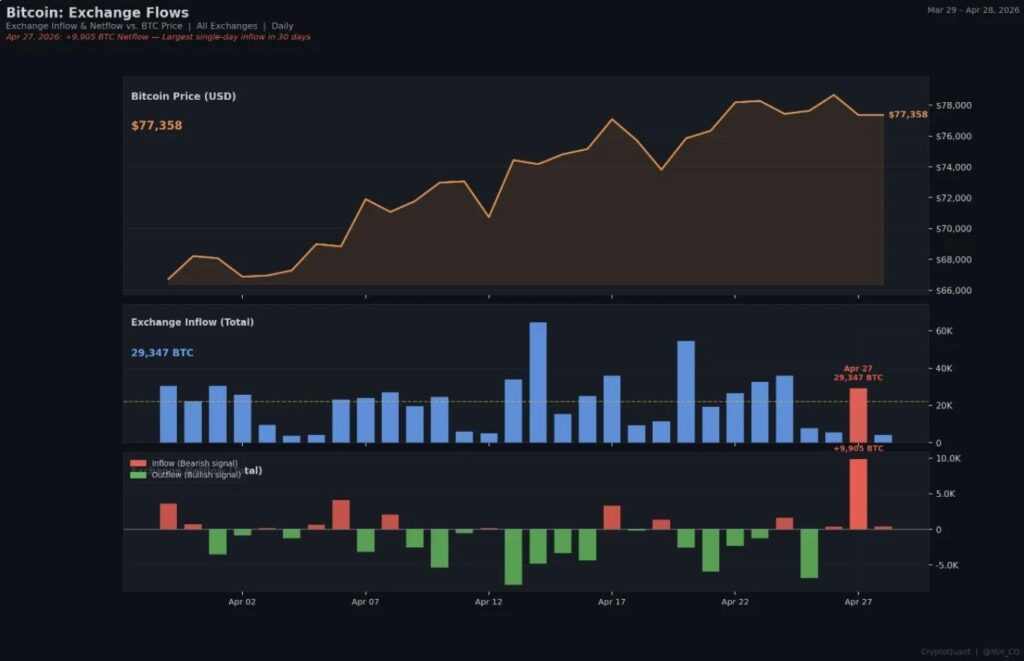
 Furthermore, the data analytics platformCryptoQuantsuggests that the increase in exchange deposits could reflect an early trend or simply typical market activity.
However, the evaluation suggests that if the inflows aren’t adequately controlled by robust demand, Bitcoin could potentially reach the $74,000 to $75,000 support level in the coming days. This zone is being closely monitored as a critical liquidity area where buyers may attempt to protect the price structure.
Additionally, on-chain data from Glassnode also indicates that the market is in a critical state. While Bitcoin’s spot price is $75,700, it falls short of several important investor cost-basis points.
The average price for short-term holders is around $78,900, compared to the active investors’ cost of approximately $85,000. A significant number of recent buyers are currently facing unrevealed losses, as the broader market is typically valued at around $78,000.
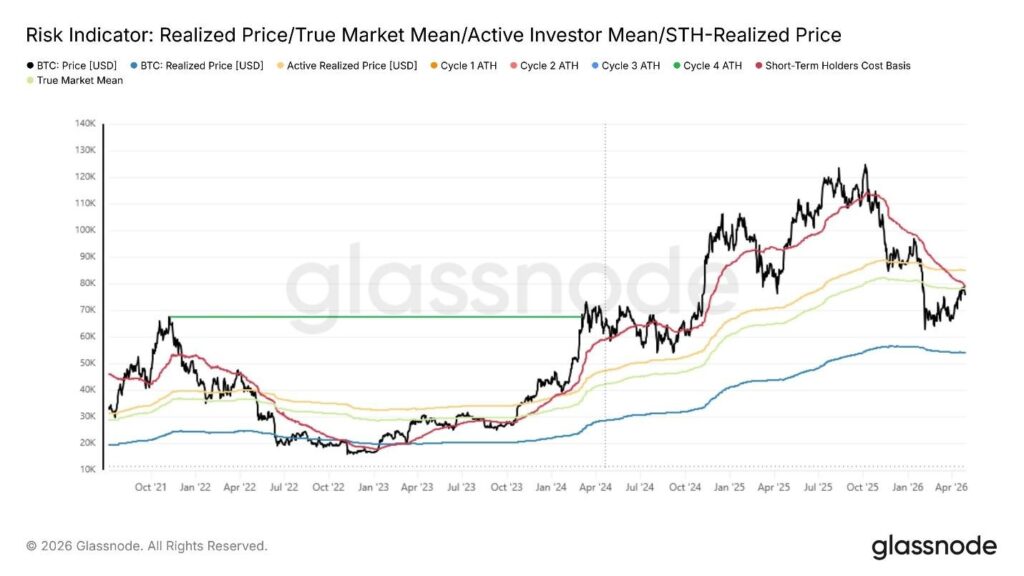
Despite this, the Realized Price, representing the average price at which all coins last moved, remains substantially lower at approximately $54,100. This gap indicates that long-term holders are still comfortably in profit overall, even as short-term market conditions appear more fragile.
Meanwhile, analyst Ted pointed out that a narrowing gap is emerging around current price levels. According to his observations, there is strong buy-side interest emerging between $73,000 and $74,000, while heavy sell orders are concentrated between $79,000 and $80,000.
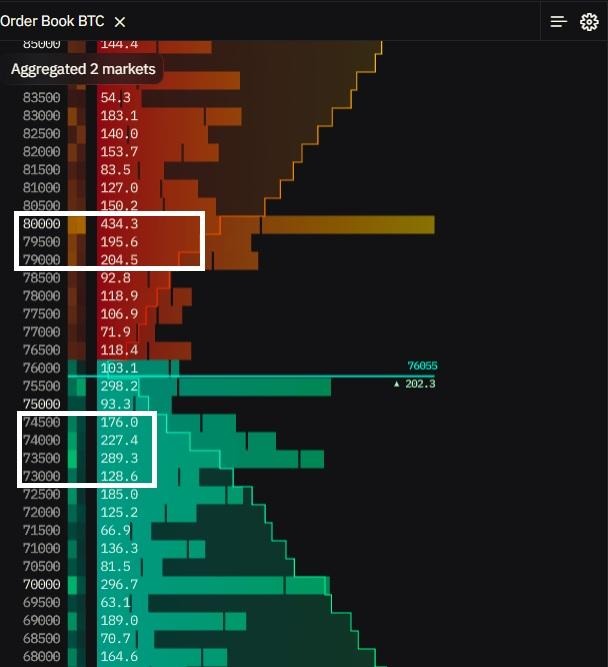
This suggests Bitcoin may continue to trade within a defined consolidation band unless a strong catalyst triggers a breakout in either direction. These range-bound conditions tend to occur in periods of market uncertainty, where liquidity levels rise on both sides before a decisive move takes place.
At press time, BTC was trading at $77,324, reflecting a 1.66% gain in the past 24 hours.