



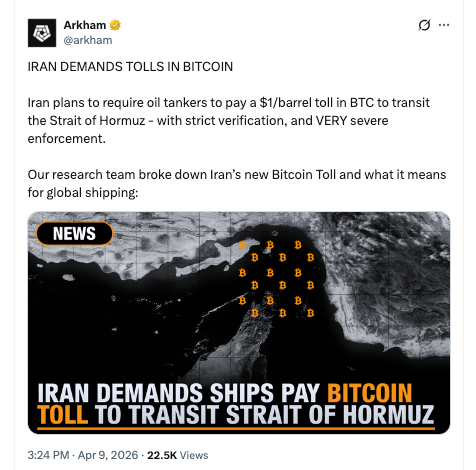
Despite the recently agreed fragile ceasefire, Iranian authorities are still seeking to collect tolls from ships passing through the Strait of Hormuz. In a post shared by analytics reporter Arkham, the Middle Eastern country is demanding a $ 1-per-barrel toll, and no state will be exempt from this tax.
Iran is likely to enforce the toll program strictly, requiring cargo assessments, background checks, and adherence to predetermined coastal routes to maintain total control of the crucial passageway.
Arkham tweeted:
While the news may not be good for the long-term price outlook for oil, it could do wonders for the premier digital currency, putting it on a potential warpath with the petro US Dollar. BTC may become a geopolitical settlement tool, free from weaponized sanctions.
Iran’s Toll Tax Can Deliver Short-term Price Boom
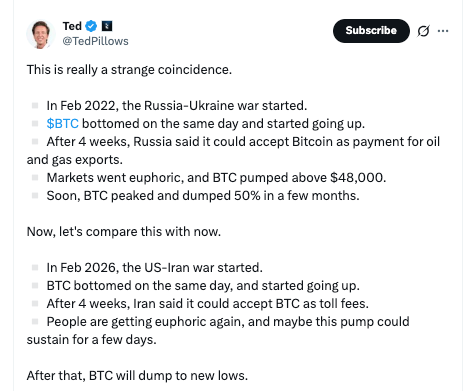
The new Iranian toll regime could trigger a major short-term price rebound, according to a popular crypto analyst. He drew parallels with the Russia-Ukraine war in which the former experimented with receiving BTC in exchange for oil, a policy that has continued at some level ever since.
 


 TedPillows, the analyst in question, tweeted:
The following graph was attached to the tweet:
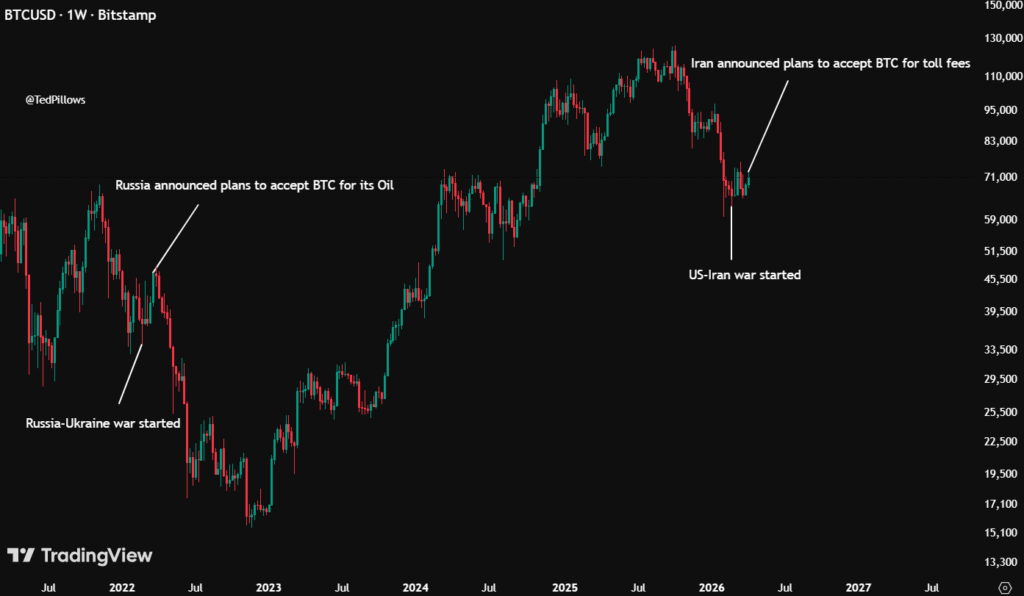
The above weekly BTC graph shows price recoveries tied to both conflicts and announcements, with the author forecasting short-term euphoria followed by a sharp decline to new lows, mirroring the 2022 price tank that caused the crypto market to fall 50% in a matter of months.
Furthermore, the Iranian toll tax can absorb the entire new supply of Bitcoin on its own. Another analyst named David focused on the supply side of things and posted this infographic:
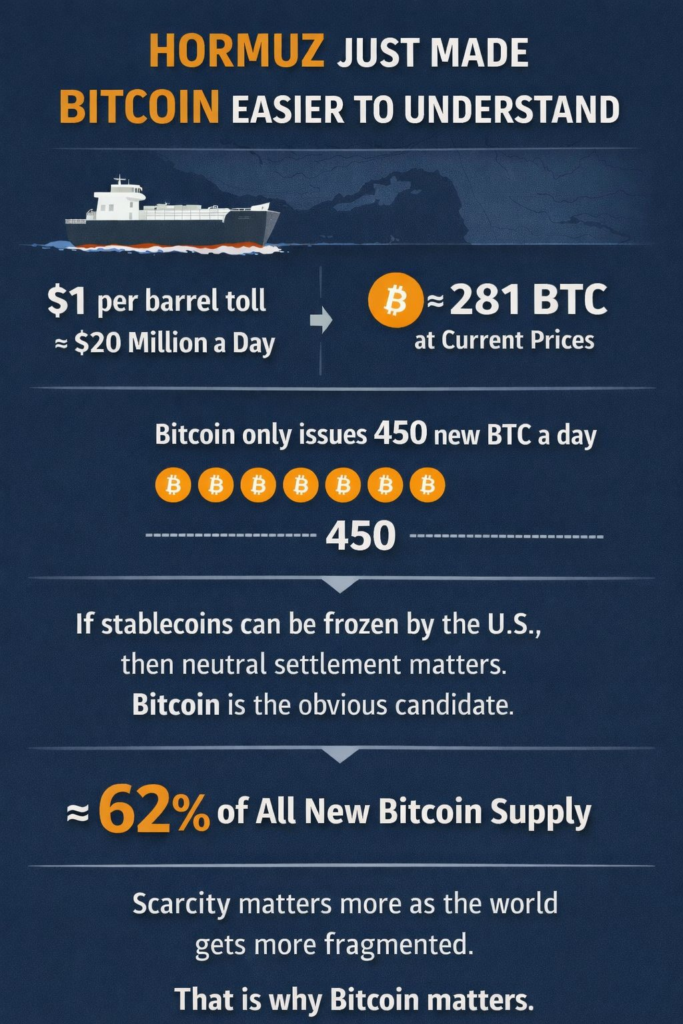
The Future of Bitcoin as a Neutral Payment Method
While theoretically, the same function could be performed with USD stablecoins, given that the American government could block their circulation through the parent issuers of those coins, BTC is obviously a better choice, free from unchecked censorship and control.
The use of Bitcoin as an alternative mode of payment is likely to grow with time because of its borderless, decentralized nature. The international crisis in the Strait of Hormuz may yet be wrapped up after tense negotiations in Islamabad. However, the newfound role of the premier digital asset as a neutral settlement asset for geopolitically sensitive trade routes will only gain traction as the international community fragments further and a new global trade order emerges.